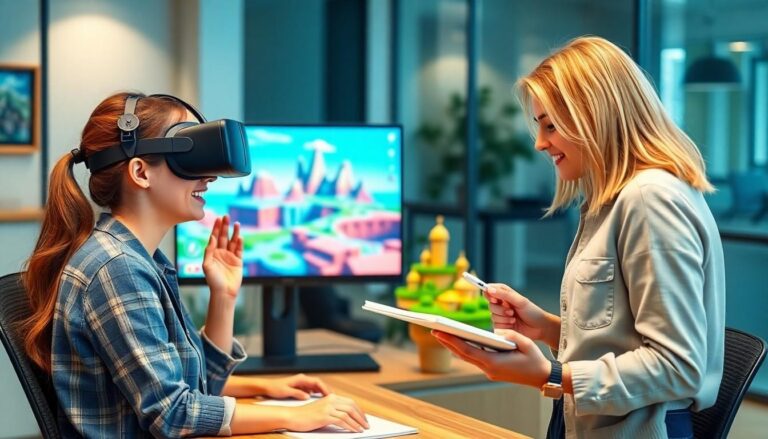
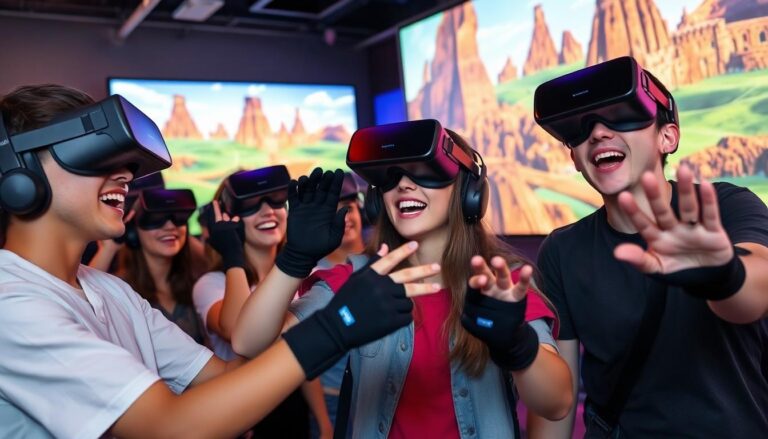
Imagine slipping on a headset and suddenly finding yourself in a world where you can soar like a superhero, dance with dinosaurs, or even take a leisurely stroll on Mars—all without leaving your living room. Welcome to the exciting realm of virtual reality applications, where the only limit is your imagination (and maybe your Wi-Fi speed).
Overview of Virtual Reality Applications
Virtual reality applications redefine entertainment by immersing users in interactive experiences. These programs cover diverse fields, including gaming, education, therapy, and real estate. Engaging content allows individuals to fly through space or visit ancient civilizations without leaving home.
Gaming leads the way in virtual reality, with titles that offer extensive worlds and narratives. Recognizable franchises utilize VR to create compelling gameplay. Educational applications enhance learning by offering simulations that promote understanding in subjects like science and history.
Therapeutic applications employ VR to aid in treatment. Those coping with anxiety or PTSD benefit from controlled, immersive environments that facilitate exposure therapy. Medical training programs also leverage VR to give students realistic practice scenarios, improving their skills and confidence.
Real estate agents use virtual reality to showcase properties. Potential buyers can tour homes and buildings from anywhere, making the process more efficient. Architects and developers create design simulations as well, helping clients visualize projects before construction begins.
In the corporate world, organizations implement VR for training and team-building. Virtual environments facilitate collaboration, making remote work more effective. Through simulations, employees encounter realistic situations that enhance problem-solving abilities.
Fashion and retail brands explore virtual reality to create unique shopping experiences. Customers can virtually try on clothes and accessories, offering a convenient alternative to traditional fitting rooms. This innovative approach enhances customer engagement and satisfaction.
Virtual reality’s impact continues to expand, transforming how society interacts with technology. Industries increasingly adopt these applications to innovate and meet user demands. Possibilities continue to evolve, suggesting a vibrant future for virtual reality in everyday life.
Types of Virtual Reality Applications
Virtual reality applications span multiple domains, providing unique experiences tailored to specific needs.
Gaming and Entertainment
Gaming and entertainment stand at the forefront of virtual reality. Players immerse themselves in detailed worlds, experiencing high-quality graphics and engaging narratives. Popular titles allow users to fight monsters, solve puzzles, or partake in social adventures with friends through virtual platforms. VR gaming promotes physical interaction, often utilizing motion controllers that enhance engagement. Multi-player options foster social connections, bridging distances as players traverse virtual landscapes together. Event organizers increasingly adopt VR for concerts and immersive performances, transforming how audiences consume entertainment.
Education and Training
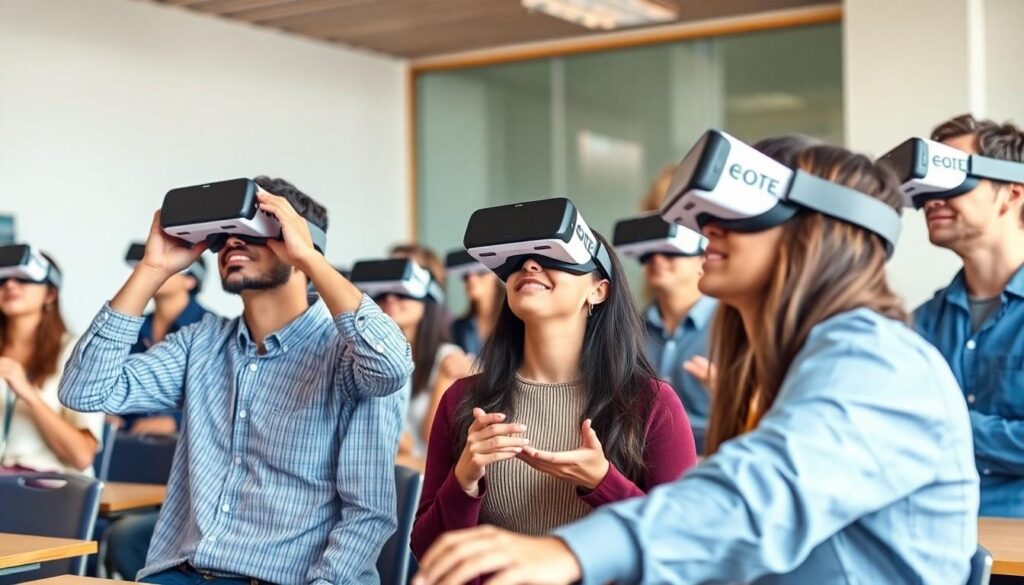
Education and training leverage virtual reality to enrich learning experiences. Classrooms can transport students to historical events or scientific phenomena, making lessons interactive and engaging. Many institutions adopt VR for medical training, allowing students to practice procedures in simulated environments without real-world risks. Safety training in industries like construction enables workers to navigate hazardous scenarios virtually, enhancing preparedness. Enhanced retention and understanding arise when learners engage with material actively. As institutions embrace this technology, virtual reality transforms the educational landscape.
Healthcare and Therapy
Healthcare applications utilize virtual reality to improve patient outcomes. Therapists employ VR for exposure therapy, helping individuals confront phobias or post-traumatic stress disorder in a controlled setting. Pain management becomes more effective as patients use immersive VR experiences to distract from discomfort during procedures. Physical rehabilitation benefits from simulated environments that encourage movement and exercise. Medical professionals also utilize VR for surgical training, allowing practitioners to hone skills through simulation. As research into VR in healthcare advances, its potential continues to grow.
Real Estate and Architecture
Real estate and architecture adopt virtual reality to redefine property viewing and design processes. Agents create virtual tours, enabling potential buyers to explore homes from anywhere globally. This innovative approach saves time for both buyers and agents, enhancing the overall house-hunting experience. Architects utilize VR to present designs interactively, allowing clients to walk through spaces before construction begins. Immediate feedback during design processes streamlines collaboration between architects and clients. Virtual reality establishes itself as a vital tool for the real estate and architecture industries, improving visualization and decision-making.
Benefits of Virtual Reality Applications
Virtual reality applications offer numerous advantages, enhancing experiences across various fields. The technology not only entertains but also educates and heals.
Enhanced Engagement
Immersive environments capture users’ attention more effectively than traditional media. Virtual reality places individuals in vivid, interactive settings where they can participate in activities directly. With this active participation, users experience greater emotional connection and retention. For instance, gamers delve into expansive virtual worlds, while participants in virtual concerts feel as though they are truly present. This level of engagement fosters deeper interactions, resulting in a memorable experience for both users and creators. Additionally, social features in VR applications allow meaningful connections among users, driving community engagement.
Improved Learning Experiences
Virtual reality transforms education through stimulating, hands-on learning. Students benefit from immersive lessons that transport them to significant historical moments or scientific concepts. Such interactions make education dynamic, enhancing retention and comprehension. In medical training, VR simulations prepare professionals for real-world procedures by allowing them to practice in a risk-free environment. Real-time feedback fosters skill acquisition and confidence. Ongoing studies show improved outcomes in learner engagement and performance, demonstrating that VR can effectively address various learning styles and needs.
Challenges and Limitations of Virtual Reality Applications
Virtual reality applications face several challenges that can hinder their adoption and effectiveness. Technical limitations and user accessibility issues significantly impact usability and reach.
Technical Limitations
Virtual reality hardware often requires significant processing power. Graphics quality can sometimes lag, leading to an experience that detracts from immersion. Motion tracking inaccuracies can disrupt gameplay or simulations, making actions feel unresponsive. Furthermore, high equipment costs can be prohibitive, limiting access for many users. Not all developers optimize VR applications for various devices, resulting in inconsistent experiences across different platforms. Compatibility issues with existing systems may restrict functionality and usability.
User Accessibility Issues
User accessibility remains a critical concern in the adoption of virtual reality. Physical disabilities can pose challenges for those trying to engage with VR applications. Many users experience discomfort or motion sickness, detracting from the experience. Limited awareness of VR technology among certain demographics further complicates access. Additionally, high costs often exclude lower-income users from enjoying advancements in VR. Educational institutions sometimes hesitate to invest in VR due to budget constraints. Inadequate user training can also create barriers, leading to frustration instead of engagement.
Future Trends in Virtual Reality Applications
Emerging trends in virtual reality applications continue to reshape multiple sectors. Advancements in hardware technology lead to increased accessibility, enabling more users to experience immersive environments.
In gaming, developers are experimenting with social VR experiences, allowing players to interact in virtual worlds like never before. Multi-user capabilities enhance collaboration, making gaming a communal activity.
Healthcare applications are also on the rise. Virtual reality exposure therapy shows promise in treating anxiety disorders and PTSD, allowing patients to confront triggers in a controlled environment. Medical training relies more on VR simulations, providing students hands-on experiences in complex scenarios.
Education leverages virtual reality to create engaging learning modules. Students can explore ancient civilizations interactively, transforming education into an active exploration of knowledge. Immersive tools cater to diverse learning styles, leading to improved retention rates.
Enterprise training is another area seeing rapid growth. Companies implement VR for onboarding and skills training, allowing employees to practice in safe, simulated environments. These applications enhance safety and efficiency in high-risk jobs.
Real estate continues evolving thanks to virtual reality. Agents offer virtual tours that provide a more comprehensive understanding of properties, making house-hunting more efficient. Architectural firms utilize VR for design presentations, allowing clients to visualize projects before construction begins.
Challenges remain, including the need for user-friendly interfaces and reducing the risk of motion sickness. Developers focus on addressing technical limitations while making experiences more comfortable for users.
Continued investment in research and development promises to push the boundaries of virtual reality. As technology improves, the integration of artificial intelligence may enable more personalized experiences, further expanding its potential across various fields.
Virtual reality applications are reshaping how individuals interact with technology and experience various fields. From immersive gaming adventures to transformative educational tools and innovative healthcare solutions, VR’s potential is vast. As advancements in hardware and software continue to emerge, accessibility will improve, allowing more users to explore these captivating environments.
While challenges remain, the ongoing investment in research and development promises to enhance user experiences and expand the applications of virtual reality. As society embraces this technology, the future holds exciting possibilities that could redefine engagement and interaction across multiple domains. The journey into virtual reality is just beginning, and its impact will undoubtedly be profound.